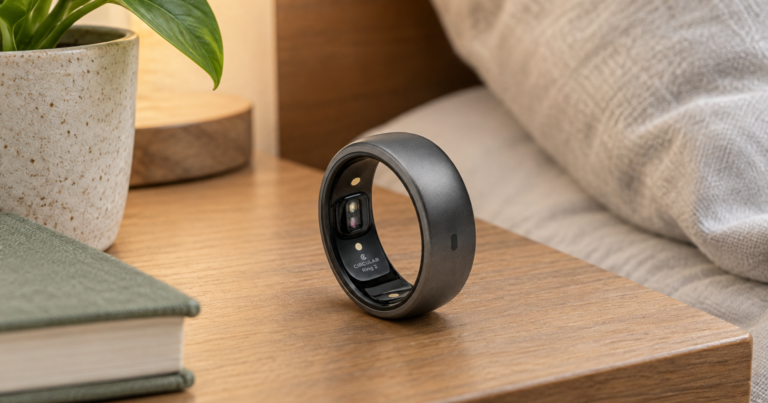
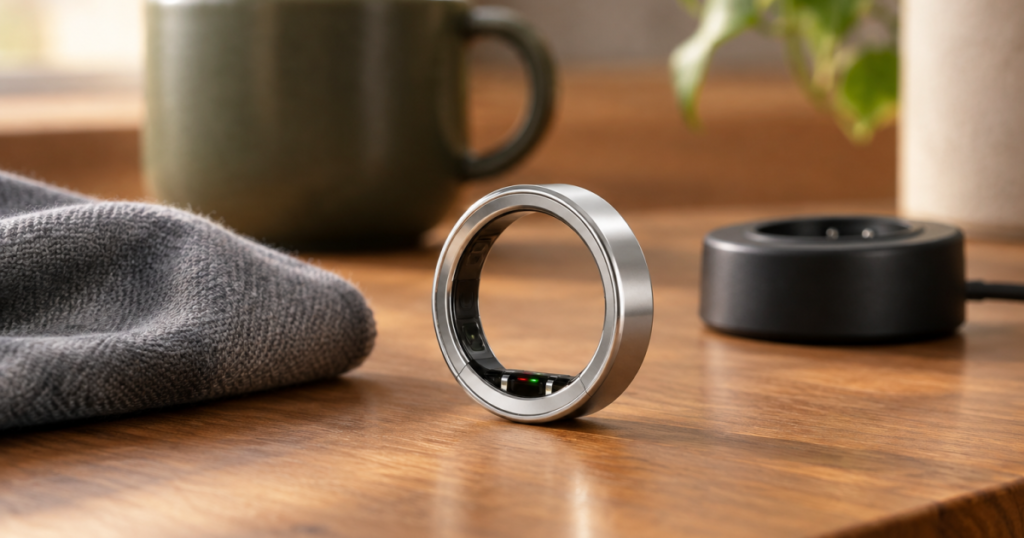
The Ultrahuman Ring PRO is the brand’s premium titanium smart ring, built for people who want sleep, recovery, movement, stress, workout, cycle, and temperature-trend tracking without wearing another screen. This Ultrahuman Ring PRO review looks at the current Ring PRO as a standalone wearable that works with the Ultrahuman app on a compatible iPhone or Android phone, with a $479 list price and no core subscription required.
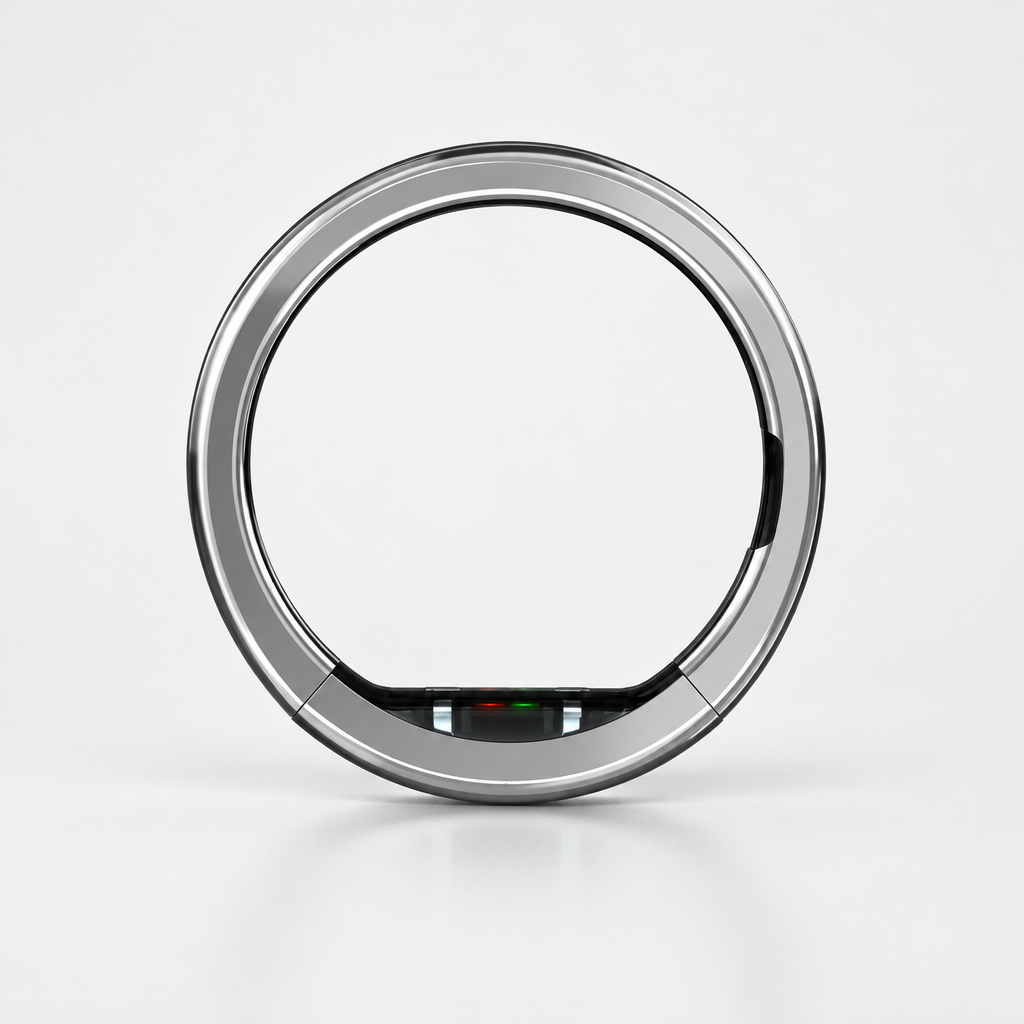
Ultrahuman Ring PRO
A strong fit for committed ring users who want premium build quality, long claimed battery life, and no core subscription
The Ultrahuman Ring PRO is easy to understand as a buying proposition: pay more up front, get a titanium smart ring with a claimed 15 days of battery life, and avoid a required core subscription. That combination gives it a strong practical appeal for people who want a calmer wearable routine rather than another device that constantly asks for charging, tapping, or attention.
Its best fit is not the person who wants the cheapest possible entry into smart rings. It makes more sense for someone who already knows they want passive overnight and daytime trend tracking, values a premium build, and wants the ownership math to be straightforward after purchase.
Pros & Cons
Pros
- No required core subscription keeps the ownership model simpler after the $479 purchase.
- Claimed 15-day battery life supports a lower-friction routine with less frequent charging.
- Titanium construction with PVD coating gives it a premium everyday-wear foundation.
- Broad sensor set covers sleep, recovery, movement, stress, workouts, cycle, and temperature trends.
Cons
- The $479 list price makes it a considered purchase rather than a low-cost trial ring.
- Sizing kit is recommended, so the best buying process takes patience before final size selection.
- The app and a compatible iPhone or Android phone remain central to the experience.
Product Details
- Product: Ultrahuman Ring PRO
- Type: Titanium smart ring for sleep, recovery, movement, stress, workout, cycle, and temperature-trend tracking
- Phone compatibility: iPhone and Android
- Companion requirements: Ultrahuman app and a compatible iOS or Android smartphone
- Core subscription required: No
- Claimed battery life: 15 days
- Water resistance: 100 m / 328 ft
- Materials: Titanium, PVD coating, epoxy, and polycarbonate
- Sensors: Temperature sensor, redesigned PPG heart-rate sensor, and 6-axis IMU
- Sizing: Sizing kit recommended; sizes 5–14
- Typical US list price: $479
For a compact spec comparison alongside other rings, keep the Ultrahuman Ring PRO spec page open while you weigh the subscription model, battery claim, sizing method, and materials.
The subscription story is the headline
The cleanest reason to consider the Ultrahuman Ring PRO is the lack of a required core subscription. In smart rings, recurring app costs can change how a product feels after the excitement of the first week fades. A ring that asks for no core subscription puts more of the cost into the initial purchase, which can suit readers who dislike ongoing wearable fees or want to understand total ownership cost before they buy.
That does not make the $479 list price insignificant. It is a premium up-front spend, and value depends on whether you will actually use the ring as a steady daily tool rather than a novelty device. The Ring PRO makes most sense if you want the data categories it tracks—sleep, recovery, movement, stress, workouts, cycle, and temperature trends—to become part of a light daily rhythm: glance, notice patterns, and move on.
The practical advantage is psychological as much as financial. A no-core-subscription model can reduce the feeling that your health data is being held behind a recurring decision. If you are trying to build a calm relationship with wearable feedback, fewer ongoing cost decisions can help keep the ring feeling like a quiet habit tool rather than a service you keep reevaluating.
Battery life is about routine, not bragging rights
Ultrahuman lists the Ring PRO with up to 15 days of battery life. Because that is a manufacturer claim rather than a hands-on endurance test here, the most responsible way to read it is as a design promise: this ring is positioned for less frequent charging than many wearables ask of you.
That matters because smart rings are most useful when they stay on through ordinary life. Overnight tracking, recovery trends, and temperature patterns depend on continuity. A longer claimed battery life gives the Ring PRO room to fit around work travel, late nights, and imperfect charging habits without turning power management into a daily chore.
There is also a data-quality implication. When a ring is easier to keep charged, it is easier to build a consistent baseline. That baseline is what makes wearable tracking more useful than reacting to a single readiness score after one odd night. If you are new to smart rings, the most useful move is still to wear the ring consistently for a couple of weeks before changing caffeine timing, training load, or bedtime based on the numbers.
Tracking breadth: useful signals, not medical conclusions
The Ring PRO includes a temperature sensor, redesigned PPG heart-rate sensor, and 6-axis IMU. Ultrahuman positions that sensor set around sleep, recovery, movement, stress, workouts, cycle, and temperature trends. In plain terms, this is a broad wellness-tracking ring, not just a sleep gadget or a step-focused activity band.
The strongest use case is pattern awareness. A ring can help you notice how late workouts, travel, irregular bedtimes, or intense work periods line up with changes in recovery-style metrics. The device measures and estimates signals; the app turns those signals into trends and interpretations. That distinction matters. A smart ring can support self-observation, but it should not be treated as a diagnostic device or a substitute for professional care when symptoms or health concerns are involved.
For day-to-day use, the best owner is probably not someone who wants every metric to issue a command. The better approach is slower and more repeatable: look for multiweek patterns, add a short note when life changes, and avoid overreacting to one night. If caffeine timing is one variable you want to test, our guide to testing your caffeine cutoff with a smart ring pairs well with a device built for passive trend collection.
Fit and sizing deserve patience
Ultrahuman recommends a sizing kit, and the Ring PRO comes in sizes 5–14. That is more than a purchase formality. With a smart ring, fit affects comfort, sensor contact, and whether you can tolerate wearing it overnight. A size that feels fine for an hour can feel different after sleep, a workout, or a warm day.
The sizing-kit step may slow down the buying process, but it is the right kind of friction. A ring that is too loose can move more than you want; a ring that is too tight can become annoying enough that you stop wearing it. The useful test is not just whether it slides on. It is whether it remains comfortable while typing, sleeping, washing hands, and moving through a normal day.
Sizes 5–14 cover a meaningful range, but finger shape still matters. If you are between sizes, the decision should be guided by the finger you will actually wear it on most often and how your hands behave overnight. Smart rings reward boring consistency, and sizing is where that consistency begins.
Build, water resistance, and everyday durability cues
The Ring PRO uses titanium with a PVD coating, plus epoxy and polycarbonate. Titanium is a strong premium material choice for a wearable that lives on the hand, where it will meet desks, bags, gym equipment, soap, and sleep. The PVD coating is also a relevant ownership detail because ring finishes are part of the long-term experience: people notice a wearable’s surface every time they look at their hand.
The 100 m / 328 ft water resistance rating is another practical strength. It reduces the need to treat the ring like a delicate accessory during everyday water exposure, and it fits the broader idea of a ring you can keep on without constantly negotiating with your environment. As always with wearables, water resistance is not the same as indestructibility, but the stated rating is reassuring for a device intended to disappear into normal routines.
The build story is one of the clearest reasons to choose this model over a more basic-feeling tracker. If you want a ring that looks and reads like jewelry first and health tech second, the material choices help the Ring PRO make sense.
Where the Ring PRO is less automatic
The main trade-off is cost. At $479, the Ultrahuman Ring PRO asks you to be fairly sure you want a smart ring, not merely curious about the category. The lack of a required core subscription helps the value case, but it does not erase the up-front price. If you tend to abandon wearables after a month, a lower-commitment option may be the wiser experiment.
The second trade-off is that the app is still central to the experience. The ring is screen-free on your hand, but the insights live in the Ultrahuman app on a compatible iPhone or Android phone. That is normal for this category, yet it matters for anyone trying to reduce phone-based health checking. The healthiest workflow is probably a short morning review and occasional trend check, not repeated score peeking throughout the day.
Finally, the broad tracking set can be a strength or a distraction depending on how you use it. Sleep, recovery, movement, stress, workouts, cycle, and temperature trends give you a wide lens. The calmer way to use that lens is to pick one question at a time—bedtime consistency, workout timing, travel recovery—rather than trying to optimize every signal at once.
Real alternatives to compare
The Ring PRO is most compelling if no required core subscription, a premium titanium build, and long claimed battery life sit near the top of your list. If your decision is more about app ecosystem, scoring style, or how another major ring brand presents readiness and sleep insights, compare it with the Oura Ring 5 before you commit.
That comparison is not about declaring one ring universally better. It is about matching the wearable to the routine you will actually sustain. The right smart ring is the one that fits comfortably, charges without becoming a chore, explains its data in a way you trust, and keeps recurring costs aligned with your expectations.
Straight answers
Does the Ultrahuman Ring PRO require a core subscription?
No. Ultrahuman lists the Ring PRO with no core subscription required, which is a major part of its value story at a $479 list price.
What phones does it work with?
The Ring PRO supports iPhone and Android through the Ultrahuman app. It is a screen-free wearable, but the app and a compatible smartphone are required for the experience.
How long is the battery life?
Ultrahuman claims up to 15 days of battery life for the Ring PRO. Treat that as the brand’s published claim rather than an independent endurance result.
Is it mainly a sleep ring?
No. Sleep is part of the appeal, but the Ring PRO also tracks recovery, movement, stress, workouts, cycle, and temperature trends using its sensor set.
Verdict
Score: 9.1/10. The Ultrahuman Ring PRO earns its recommendation through three unusually decision-shaping facts: no required core subscription, a claimed 15-day battery life, and a premium titanium build with broad wellness tracking. The $479 list price makes it a considered purchase, and the sizing-kit step should be taken seriously, but the overall package is strong for someone who wants a low-friction smart ring that can support steady sleep and recovery awareness without adding another screen to the day.
Ultrahuman Ring PRO
A strong fit for committed ring users who want premium build quality, long claimed battery life, and no core subscription