
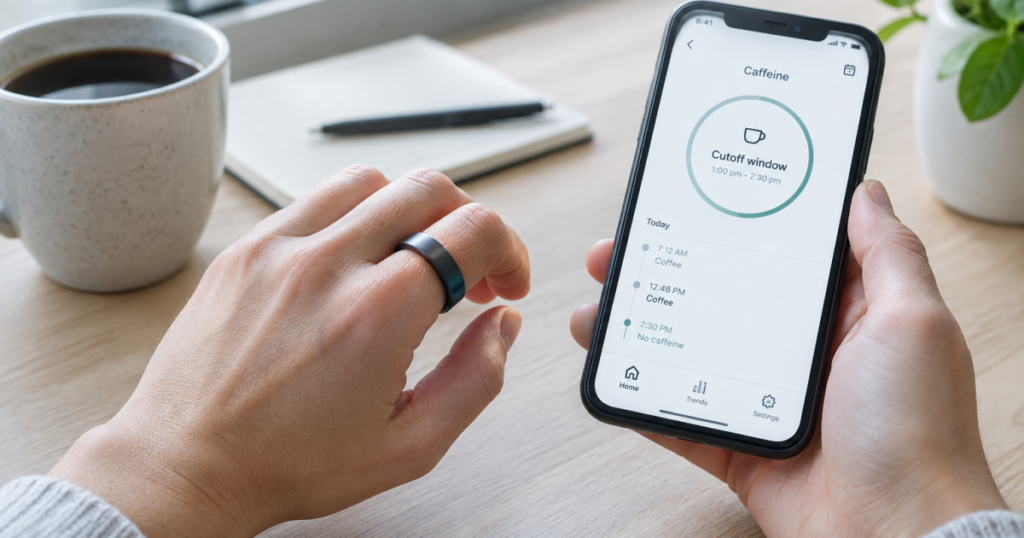
Caffeine timing is one of those sleep variables that feels obvious until real life gets involved: meetings run long, workouts shift, and afternoon coffee becomes a tiny act of optimism. A smart ring caffeine cutoff experiment gives you a calmer way to test timing against your own sleep, recovery, and morning energy instead of guessing from one rough night.
Health note: Caffeine changes related to pregnancy, heart rhythm concerns, anxiety, diagnosed sleep disorders, medication interactions, or treatment decisions should be handled with a qualified healthcare professional in line with applicable clinical standards and local care requirements.
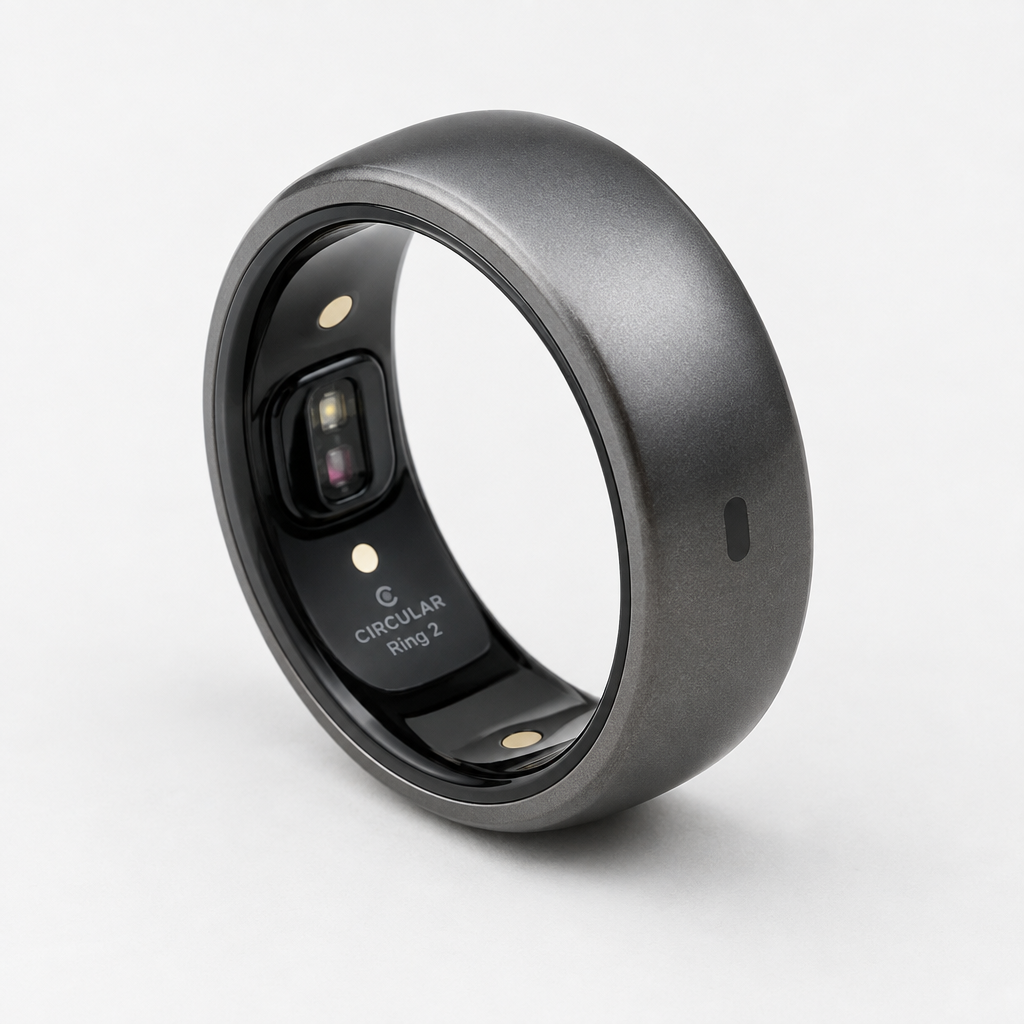 Circular Ring 2
Titanium smart ring with ECG, blood-pressure trends, and no mandatory subscription
The short version
Use your ring to compare two ordinary blocks of life: a baseline period where you keep your normal caffeine timing, then a test period where you move your last caffeine earlier and change as little else as possible.
- Start with at least 7 nights of normal behavior; 14 nights is better if your schedule varies.
- Pick one clear rule, such as “no caffeine after 2:00 pm” or “last caffeinated drink at least 8 hours before bed.”
- Track caffeine time, bedtime, wake time, alcohol, late meals, hard workouts, travel, naps, and morning energy.
- Compare averages and patterns, not single-night scores.
- Treat sleep stages and readiness scores as estimates that help you notice trends, not medical conclusions.
Step 1: Build a clean starting point
A caffeine experiment works best when you know what “normal” looks like first. If you already have several weeks of ring data, choose a typical 7- to 14-night stretch that reflects your usual routine. If you are new to the device, give it time to learn your pattern before changing anything major.
For a structured start, use a two-week smart ring baseline plan. The point is not perfection. It is to avoid blaming coffee for every restless night when the real culprit might be travel, a late dinner, a stressful workday, or going to bed an hour later than usual.
Step 2: Choose one cutoff rule you can actually keep
The best caffeine cutoff is not the most heroic one. It is the one you can repeat long enough to measure. If your normal last coffee is at 4:00 pm, jumping to “no caffeine after breakfast” may create withdrawal headaches, mood changes, or a test that collapses by Wednesday. A smaller shift is often cleaner.
Good test rules
- Move your final caffeine 2 hours earlier than usual.
- Set a fixed cutoff, such as 1:00 pm or 2:00 pm, and keep bedtime similar.
- Keep your morning coffee routine unchanged so the main variable is timing, not total lifestyle upheaval.
- Include all obvious caffeine sources: coffee, espresso drinks, tea, energy drinks, pre-workout drinks, cola, and caffeinated gels.
If a label makes it easy, record an estimated caffeine amount in milligrams. If not, do not turn the experiment into homework. The time of your last caffeine is the main variable here.
Step 3: Run the experiment in simple phases
A useful format is baseline, test, then optional confirmation.
- Baseline phase: 7 to 14 nights of your usual caffeine timing.
- Test phase: 10 to 14 nights with your new cutoff rule.
- Confirmation phase: keep the cutoff for another week, or return to your old timing for a few days if you want to see whether the pattern reverses.
Do not overhaul your training plan, bedtime, bedroom temperature, alcohol intake, and evening screen habits at the same time. That creates a dramatic wellness montage, not a readable experiment. Your ring can collect useful passive data, but it cannot explain every confounder unless you give it context.
Step 4: Watch the metrics that are most likely to matter
Smart rings typically measure signals such as movement, heart rate, heart rate variability, and sometimes skin temperature trends, then estimate sleep and recovery patterns from those signals. Different rings report different metrics, so use the fields your app already gives you rather than chasing a perfect dashboard.
Prioritize these signals
- Sleep timing: bedtime, wake time, and whether your sleep window stays consistent.
- Sleep continuity: awake time or interruptions, if your ring reports them.
- Sleep onset estimate: whether the app suggests you are taking longer to fall asleep.
- Resting heart rate: whether nights after later caffeine tend to look elevated for you.
- HRV trend: whether your recovery signal improves, worsens, or stays flat across the test period.
- Readiness or recovery score: useful as a summary, but not the only verdict.
- Morning note: your own 1-to-5 energy rating before you check the app.
Be cautious with sleep stage percentages. Consumer wearables estimate stages, and those estimates can vary by person and device. For this experiment, sleep consistency, continuity, resting heart rate, HRV trend, and how you feel in the morning usually provide a sturdier picture.
Step 5: Log it without making tracking annoying
The ideal log is short enough that you will still use it when you are tired. One line is enough: “Last caffeine 1:30 pm, coffee, normal workout, no alcohol, energy 3/5.” That gives your future self something to compare against the ring data.
On the Oura Ring 4, use caffeine tags where they fit your routine. Ultrahuman users can treat the Caffeine Window as a planning cue, while still recording what actually happened. With RingConn or the Samsung Galaxy Ring, use any notes or tags available in your current app version; if the exact label you want is not available, keep a brief note in your calendar, notes app, or paper sleep journal.
Step 6: Decide what counts as a real result
A useful result does not require every metric to improve. Look for a pattern where at least two of three areas point in the same direction: ring trends, morning energy, and real-life practicality.
- Strong signal: earlier caffeine lines up with better sleep continuity, steadier recovery trends, and better morning energy across most nights.
- Mixed signal: one metric improves, another worsens, or the results only appear on weekdays.
- No clear signal: your averages look similar and your notes do not suggest a felt difference.
If the result is mixed, do not declare failure. Try a narrower question next: “Does caffeine after 3:00 pm affect me?” or “Do energy drinks behave differently from morning coffee?” Personal experiments get more useful when the question gets smaller.
Common mistakes that muddy the data
- Changing total caffeine and cutoff time at once. If you drink less overall, you are testing amount and timing together.
- Reacting to one bad score. One restless night can come from stress, a late meal, alcohol, illness, travel, or a noisy room.
- Ignoring weekends. A later bedtime can hide or exaggerate caffeine effects.
- Checking the score before your body. Write your morning energy note first, then open the app.
- Overvaluing precision. A consistent note beats a complicated spreadsheet you abandon after three days.
A few smaller details can also distort the read. Caffeine is not always obvious, especially in pre-workout powders, “focus” drinks, kombucha-style beverages, chocolate-heavy desserts, and some headache medications. You do not need a perfect milligram count, but if a product is designed to feel energizing, log it as a possible caffeine source.
Serving size matters, too. A 12-ounce drip coffee, a double espresso latte, and a large cold brew can behave differently even if they all get filed mentally as “one coffee.” If your cutoff looks clean but the dose keeps changing, your ring data may look noisy for reasons that have nothing to do with timing.
- Do not judge the first one or two nights too harshly if moving caffeine earlier changes your usual rhythm or triggers mild withdrawal.
- Mark unusual days, such as illness, high stress, long travel, or a hard evening workout, so they do not carry too much weight.
- If you work shifts or rotate schedules, compare similar sleep windows rather than mixing day sleep and night sleep together.
The goal is not to control life like a lab study. It is to make the experiment clean enough that the obvious patterns can show up. A simple note like “large cold brew at noon, stressful day, late dinner” gives your smart ring data a much better story to sit inside.
Key questions answered
How long should the test run?
Use at least 7 nights for a rough read and 10 to 14 nights for a more useful comparison. If your schedule changes often, longer is better because it helps smooth out random noise.
What if my sleep score improves but I feel the same?
Treat that as a partial result. Your ring may be detecting a trend that is not obvious yet, or the change may not matter much to your daily life. Keep the cutoff only if the benefit feels worth the inconvenience.
Does decaf count?
Decaf coffee can still contain some caffeine, but it is usually much less than regular coffee. If you are sensitive, log decaf timing too so you can see whether it clusters around restless nights.
Why it matters
A smart ring is well suited to this kind of experiment because it works quietly in the background. You do not need another screen at bedtime or a complicated lab setup. You need a stable baseline, one clear change, a few honest notes, and enough patience to let trends emerge.
The payoff is not a universal caffeine rule. It is a personal one: the latest time you can enjoy caffeine without reliably compromising your own sleep, recovery signals, or next-morning energy. That is the kind of low-friction insight wearable tracking is actually good at delivering.